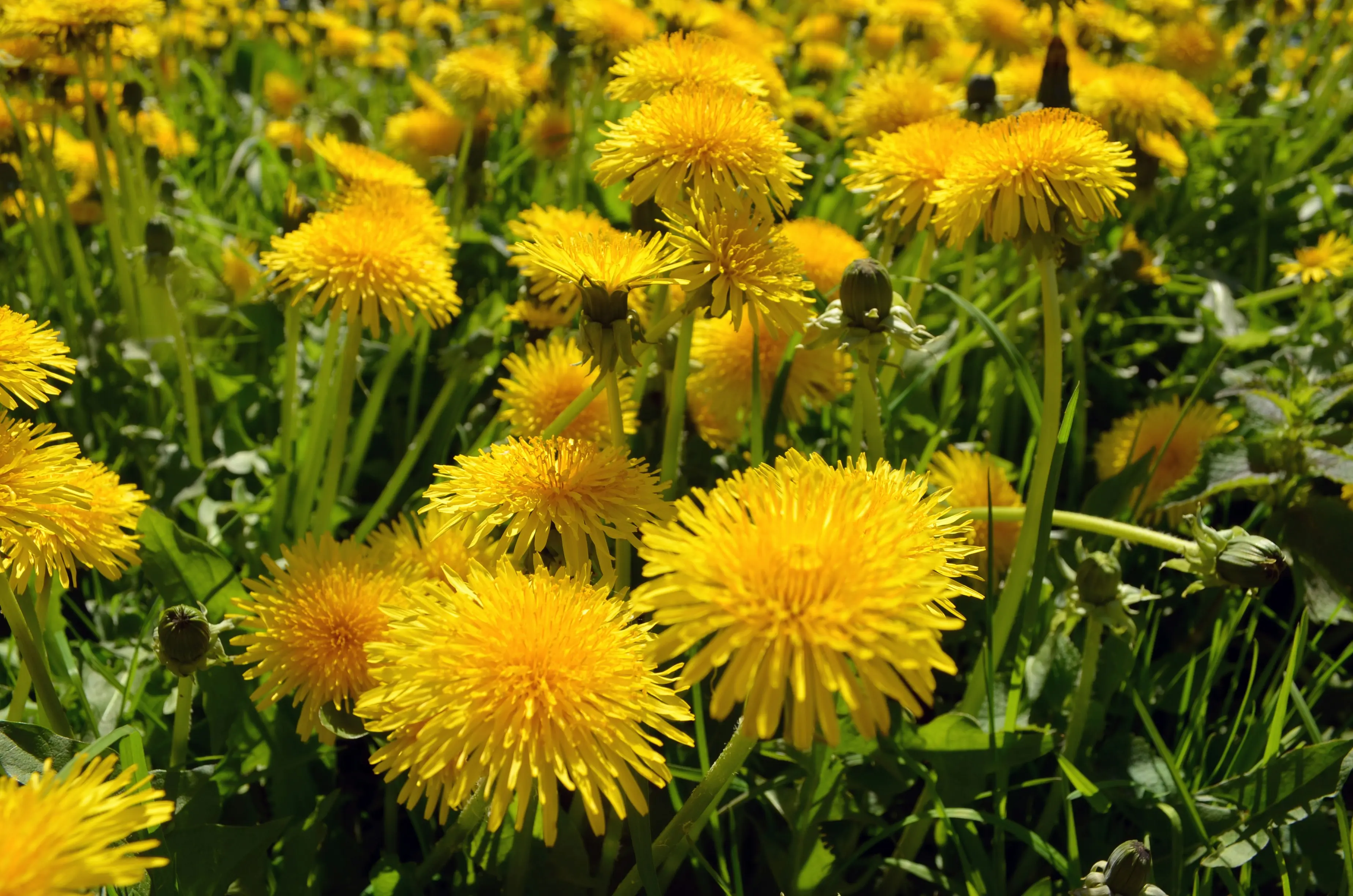
Every spring, millions of dandelions open across British lawns and are removed within days. The mowers come out, the herbicide gets applied, and the garden is returned to its uniform green. This has happened so consistently, and for so long, that treating dandelions as a problem to solve has become a default assumption of lawn care, largely unexamined and rarely questioned.
The case for questioning it is now substantial. A dandelion in flower in March is not a sign of a neglected garden. It is one of the most ecologically productive things that garden contains at that moment in the year, and removing it has consequences that ripple outward through the food chains that gardens support.
What you are actually looking at
The plant most people think of as one species is in fact a genus of extraordinary complexity. The Botanical Society of Britain and Ireland recognises more than 230 dandelion microspecies in Britain and Ireland, of which around 58 are endemic, found nowhere else in the world. Most are apomictic, meaning they reproduce without fertilisation and produce seeds that are genetically identical to the parent plant. Each microspecies is a stable, self-replicating lineage, and the distinctions between them involve subtle differences in leaf shape, the number of bracts beneath the flowerhead, and the colour and texture of the seed. Identifying them to species level is, by the admission of specialist botanists, one of the most technically demanding tasks in British plant identification.
For practical purposes, most of what UK gardeners encounter is the broad aggregate Taraxacum officinale agg., the common dandelion group. The ecological value described in this guide applies across these species. What matters from a wildlife perspective is not which microspecies is flowering, but that it is flowering at all, and when.
The timing argument
Dandelions flower from March through to October, with the primary flush in April and May. That March start is the critical detail. It places dandelion flowers in a period of the year when almost nothing else is open: after the early bulbs and before the main flush of spring blossom, there is often a gap of several weeks in which gardens offer very little to foraging insects.
This timing coincides with one of the most vulnerable moments in the bumblebee year. Queen bumblebees emerge from hibernation in late February and March having not fed since the previous summer. They must find nectar immediately to fuel their own survival and begin founding a colony. A queen that cannot find enough food in the first days after emerging may not survive to establish a colony at all. At this precise moment, a garden with dandelions in flower is providing something that a garden without them almost certainly cannot.
Queen bumblebees emerge from hibernation in February and March having eaten nothing since the previous summer. A single frost at the wrong moment, or a shortage of early flowers, can end a colony before it starts. Dandelions flowering in March and April are often the most important food source in the garden at this point in the year.
Early solitary bees face the same pressure. The hairy-footed flower bee, one of the first solitary bee species on the wing in southern England, emerges from March and forages heavily on early spring flowers. Tawny mining bee males emerge from late March, ahead of the females, and need accessible nectar sources while they wait. The mining bee Andrena fulva, one of the most visible solitary bees in British gardens, times its emergence to coincide with the spring flush, and dandelions form part of that early food supply. The timing argument alone, independent of everything else, is sufficient to make the dandelion one of the most important plants a British garden can contain in the first quarter of the year.
What visits
Direct sampling of pollinators from flowering dandelions in research studies has recorded around 50 insect species visiting the flowers, including 37 bee species. The list of insects that use dandelions extends considerably beyond pollinators alone.
Bees are the most visible visitors, ranging from queen bumblebees and buff-tailed workers to the smaller solitary species including mining bees, mason bees, and the early-flying Andrena species that specifically time their emergence to the March and April flower flush. Hoverflies visit in quantity: the drone fly and marmalade fly are regular dandelion visitors, as are many smaller species. Dandelions feature on the RHS Plants for Pollinators list.
Moths use dandelion leaves as a larval food plant. The species recorded include the buff ermine, white ermine, dot moth, garden tiger, ruby tiger, riband wave, and yellow shell. The garden tiger moth has declined significantly since the 1980s, particularly in south-east England, and one documented driver is the removal of the weedy, herbaceous plants its caterpillars depend on, dandelion among them.
Birds use the seed heads directly. Goldfinches, bullfinches, and greenfinches are regular dandelion seed feeders, and sparrows and siskins visit them too. The same food chain that runs from dandelion leaves through moth caterpillars then extends to insect-eating birds. A patch of dandelions is not a single resource but a linked set of them, operating at different points in the season and supporting different parts of the garden food web simultaneously.
The pollen quality debate
One genuine complication deserves honest treatment. Research published in the Journal of Economic Entomology found that dandelion pollen is low in several amino acids, including isoleucine, valine, leucine, and arginine, which are essential for honey bee brood development. Laboratory studies have shown that honey bees fed dandelion pollen as their sole food source struggle to raise brood successfully, and similar problems have been documented for mason bees and bumblebees when the diet is restricted to dandelion pollen alone.
This finding has been used in some quarters to argue that dandelions are less valuable than commonly assumed. That conclusion does not follow from the evidence. No bee in a functioning garden feeds exclusively on dandelion pollen, any more than a human eats only one food. Pollen diversity is how bees meet their full nutritional needs, and dandelion pollen is one component of a diet that also includes willow, hawthorn, fruit tree blossom, and whatever else the garden and surrounding landscape provides. The question is not whether dandelion pollen is nutritionally complete in isolation. It is not, and nobody claims otherwise. The question is whether dandelion flowers in early spring, when the alternatives are minimal, provide a net benefit to foraging insects. The answer to that question is clearly yes.
The nectar value is entirely separate from the pollen question, and dandelion nectar is freely accessible and produced in significant quantity. For the many insect species that visit flowers primarily for nectar rather than pollen, the amino acid profile of the pollen is irrelevant.
Below ground
The dandelion’s taproot can reach 30 centimetres or more into the soil, and on compacted ground it goes deeper still. This root physically penetrates compacted layers that grass roots cannot reach, creating channels for water and air infiltration and loosening the structure of soil that has been compressed by foot traffic or machinery. In a vegetable plot or allotment with compacted paths, dandelions establishing themselves in those paths are doing work that no shallow-rooted plant can do.
As the taproot draws up calcium, potassium, and phosphorus from deeper in the soil profile, these minerals end up in the leaves. When dandelion leaves die back and decompose on the surface, those minerals return to the topsoil where shallower-rooted plants can access them. This is the principle behind dynamic accumulators: plants that function as a mineral pump between deeper and surface layers of soil. The dandelion is one of the most effective in the British flora. Chopped dandelion leaves added to a compost heap contribute a useful mix of minerals to the finished material.
The lawn evidence
In 2019, the conservation charity Plantlife launched No Mow May, a campaign asking gardeners to leave their lawns uncut through the month of May to allow wildflowers including dandelions, clover, and selfheal to flower. The initiative has grown consistently: over a million UK households took part in 2025.
The increase in nectar production recorded in unmown lawns compared with regularly cut grass, from Plantlife’s citizen science surveys across more than 89,000 UK lawns. Unmown plots in a Staffordshire trial attracted 14 pollinator species versus 3 in the weekly-mown control areas.
The data from Plantlife’s Every Flower Counts survey, collected from more than 200,000 UK lawns, has consistently found that allowing lawn flowers to bloom fills a genuine gap in the nectar calendar between spring bulbs and the main summer border flush. Dandelions are the primary flowering plant in most lawns during this window, and the survey data shows that they are being used. Participants in the campaign have recorded almost 100 pollinator species on their lawns during May alone, including 25 species of moth and butterfly and 24 species of bee.
The implications of this data are wider than lawn management. A garden that mows weekly from March onwards, removing dandelion flowers before they have time to open fully or be visited, is providing a fraction of the ecological value it could provide at minimal cost. The cost of providing it is not mowing for a few weeks, or not mowing one section of a lawn at all.
Managing dandelions without losing their value
The goal is not a garden overrun with dandelions. It is a garden in which dandelions are understood as a resource rather than a problem, and managed accordingly.
Decide where, not whether. A small unmown patch, a border edge, or a section of lawn deliberately left uncut from March to June provides meaningful early-season value without affecting the rest of the garden. Dandelions left to flower in a vegetable plot path or a rough grass area require no management at all: they are doing their most useful work precisely where the ground is most compacted and most in need of what they offer.
Manage seed spread if needed. Dandelion seeds disperse easily on the wind and can establish quickly in borders. If seed spread is a concern, removing the seed heads before they open is straightforward and does not prevent the flowers from being visited. The flowers need to be left open and accessible; the seed heads do not need to disperse. A weekly pass to remove seed heads from plants you want to keep in place preserves their wildlife value while limiting their spread.
If you must remove them, do not use herbicide. A herbicide applied to dandelions in flower will kill the insects visiting them, not just the plant. The correct method for removal is to dig out the taproot with a long-bladed tool, cutting as deep as possible. A root left behind will regrow. The goal when removing is to get the whole root, which requires the right tool and some patience, not a chemical shortcut that harms everything around it.
Leave them in the vegetable plot. Dandelions establishing in compacted paths between beds are beneficial rather than competitive. They are not drawing from the same soil layer as your crops, and their presence indicates and begins to address compaction. Leave them in path areas, pull them from within beds if needed.
Dandelions in Suffolk
Suffolk’s garden landscape makes this argument particularly relevant. The county has lost substantial areas of flower-rich grassland, and the wildflower diversity that once characterised field margins, hedgerow bases, and rough ground across much of the county has contracted significantly over the past eighty years. In that context, garden lawns and rough ground are carrying a disproportionate share of the early-season floral resource that wild pollinators depend on.
The dandelions in Suffolk gardens are, in many cases, providing the early spring nectar that would once have come from a much wider and more diverse landscape. The decision to mow them off in March is, in that context, not a neutral act of tidiness. It removes one of the few early resources available in a landscape that already offers too few of them.
Dandelion sightings and No Mow May survey data can be contributed to Plantlife’s Every Flower Counts survey at plantlife.org.uk. The survey maps which lawn wildflowers are present where, and its dataset is used to inform conservation policy around urban and suburban green space management across the UK.
Further reading
-
Plantlife — Every Flower Counts (plantlife.org.uk)
The citizen science lawn survey that has collected data from over 200,000 UK lawns. Free to take part, takes around fifteen minutes, and contributes directly to the national dataset on urban pollinator resources. Also the home of the No Mow May campaign. -
BSBI — Botanical Society of Britain and Ireland (bsbi.org)
Species accounts and identification guidance for all British and Irish dandelion microspecies. The BSBI dandelion identification guide is freely available on their website for anyone interested in going further with the genus. -
RHS Plants for Pollinators (rhs.org.uk)
The RHS evidence-based plant list includes dandelion as a recommended pollinator plant. Their advice pages also cover practical lawn management for wildlife. -
UK Pollinator Monitoring Scheme (ukpoms.org.uk)
The national scheme generating systematic data on pollinator abundance. Volunteers carry out standardised Flower Insect Timed counts that include dandelion as one of the recorded flower types. Open to anyone and specifically looking for participants in under-recorded areas including parts of Suffolk. -
Bumblebee Conservation Trust (bumblebeeconservation.org)
Guidance on early-season resources for queen bumblebees, including the role of dandelions and other spring flowers. Species pages for all 24 British bumblebees, with notes on the timing of emergence and the flowers they depend on most.